
Work with me
You cannot control your gut. You can change how much of your life it takes up.
Eight sessions over twelve weeks of relaxation-based hypnotherapy, cognitive behavioural techniques and mindfulness, for people living with irritable bowel syndrome (IBS), alongside the care you already have from your GP.
The programme
Eight sessions. Twelve weeks. A plan you can see from day one.
Living with IBS takes an enormous amount of effort. The watching, the planning, the reading of every twinge, the working out where the toilets are before you agree to anything. That is the part this programme works on, and it takes far more out of you than most people realise.
Session one
An unhurried conversation about your history and what daily life is like, and a plain explanation of the two-way conversation between the gut and the brain.
Sessions two to seven
Deep relaxation using gut-directed hypnotherapy, which means the hypnosis is pointed at your gut rather than at anything else. Alongside it, cognitive behavioural therapy (CBT) techniques for the worry, the anticipating and the second-guessing, and mindfulness for the constant scanning of your own body. The aim is to help you feel calmer, less anxious about your symptoms and more in control of your day.
Session eight
The session that pulls it all together. We build your own toolkit for harder weeks, so you know what to reach for and in what order. You take it away with you.
Afterwards
Once you have finished, there is a live relaxation session every month, online, open to anyone with IBS. Your first month is included. After that it is £25 a month if you would like to carry on, and nothing at all if you would not.
Why twelve weeks and not eight
Sessions are weekly for the first month, then fortnightly. That is deliberate. Relaxation of this kind is a skill you build, not something done to you, and skills need gaps to practise in. Eight sessions crammed into eight weeks leaves you no room to use any of it.
Between sessions you get relaxation recordings made for you, from your own images. Not a generic track.
No restrictive diets. No willpower. No “have you tried just relaxing”.
Being straight with you
What this is, and what it is not
What it is
Structured relaxation, hypnotherapy, cognitive behavioural techniques and mindfulness, delivered by a cognitive behavioural hypnotherapist with specialist IBS training. Practical techniques for the anxiety, the anticipating and the constant monitoring. Work that sits alongside your GP and any dietetic care, supporting it rather than competing with it.
What it is not
It is not a substitute for medical care, and it does not diagnose anything. It is not a diet plan, and I will not give you dietary advice. That belongs with your GP or dietitian. And I cannot tell you what your symptoms will do. Nobody honest can, and I would be wary of anyone who says otherwise.
What you can trust
Your symptoms are treated as real and physically grounded, because they are. No judgement, no diet policing, and no suggestion that you brought this on yourself.
Two ways to do it
Same programme. Same twelve weeks. Your choice of room.
One to one
The IBS Reset
£999 founder rate for the first five · full price £1,199
Or £549 now, then £275 at the start of each of the next two months (£1,099 in total).
- Every session built around what daily life is like for you, not a script
- An unhurried first conversation before we start
- Relaxation recordings made for you, from your own images
- Email support between sessions
- A toolkit for harder weeks, to take away with you
- Your first month of the monthly relaxation sessions afterwards
I take on five clients at a time, so the work stays properly personal. The founder rate is for the first five, and there is sometimes a short wait.
Book a free 15-minute callSmall group · waiting list open
The IBS Reset, in a small group
£399 founder rate for the first group · full price £499
Or £219 now, then £110 at the start of each of the next two months (£439 in total).
- Session one is a one to one with me, so we start with you and not the group
- Sessions two to eight delivered live to a small group
- Your own recording, made for you after that first session
- You never have to talk about your symptoms, unless you want to
- The same toolkit to take away
- Your first month of the monthly relaxation sessions afterwards
The first group runs at the founder price with six places. Later groups have eight places at the full price. Join the waiting list and you will hear before anyone else.
Join the waiting listIs hypnotherapy right for me?
A free fifteen minute call, no pressure and no sales pitch
We talk through what has been going on, what you have already tried, and whether this approach suits you. I will tell you if it does not, because I only take five clients at a time and it does not work when the fit is wrong. Pick a time below.
Fit
This suits some people and not others
Who this is for
You have a diagnosis of IBS from your GP, and you have had it a year or more. The worry and the planning around it take up more of your life than you would like. And you can give it twenty minutes of practice on most days for twelve weeks.
Who this is not for
You do not have a diagnosis yet. Please see your GP first, and I will ask you about this. You want something done to you. This is a skill you build, and it needs your effort as well as mine. Or you are looking for a guarantee about your symptoms. There is not one to give.
About the group
It is not a support group, and you never have to talk about your symptoms
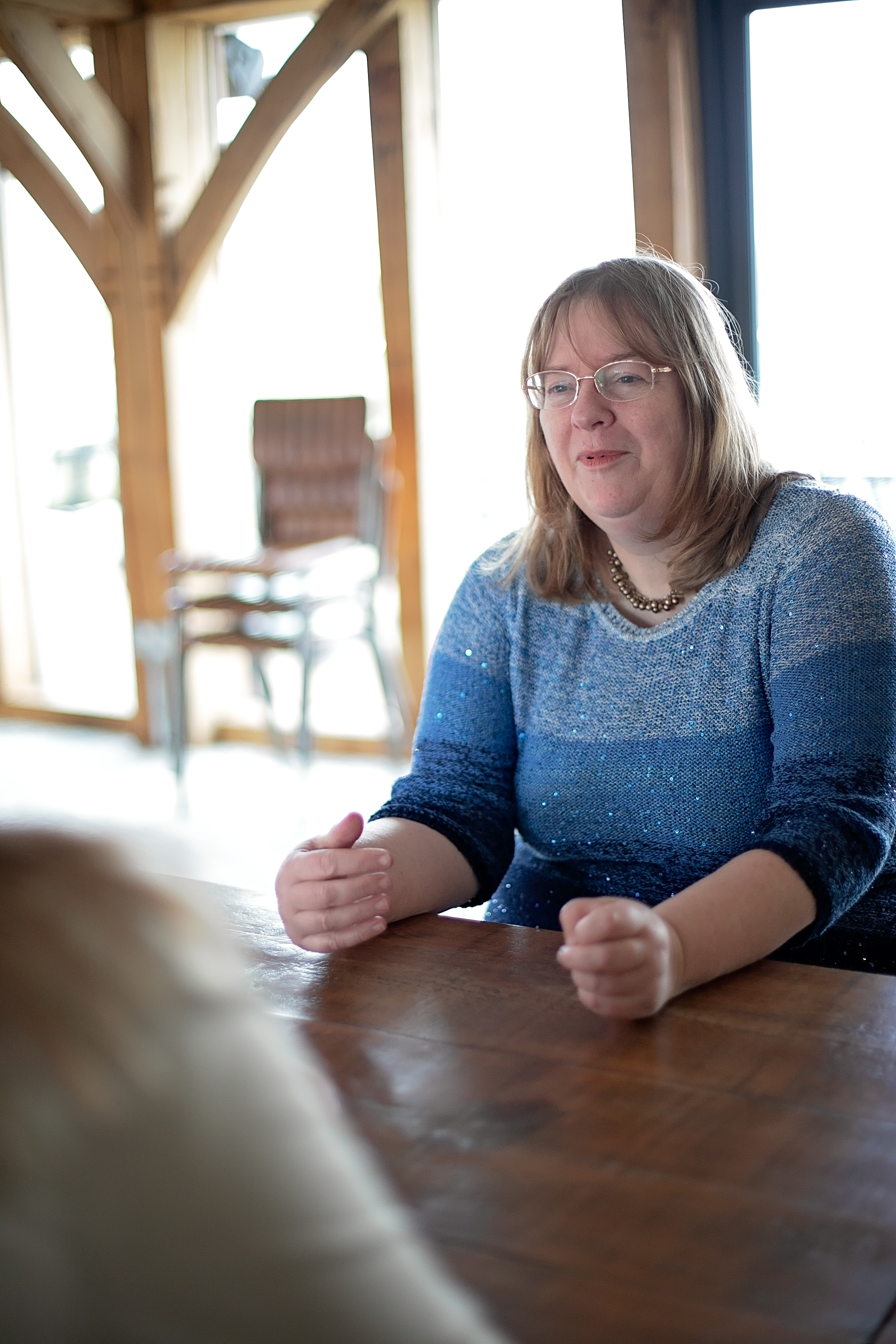
This is the question I get asked most, so let me answer it plainly. Nobody sits in a circle describing their symptoms. For the first month you arrive, listen, and lie back with your eyes shut while I do the relaxation work.
From the halfway point, once you are trying things out in real life, we open five minutes at the start of each session for people to say what they tried. Only what they tried. Never how their gut has been. You can pass, every single time, and plenty of people do.
That rule is deliberate. Hearing that somebody else sat in the cafe where she could not see the door, and was fine, is often the thing that makes it possible to try it yourself. Hearing a run-through of everyone’s symptoms is not, and in a condition where attention makes sensation louder it would work against everything else we are doing.
None of which means you have to hold anything back. If there is something you want to say, say it. The promise is that nothing is ever required of you, not that anything is off limits.
You can also leave the call for the loo at any moment, without explaining, without asking, and without anybody making anything of it. I say that out loud in the first session, because for most people it is the thing stopping them from signing up.
The other question is whether a mixed group works when everyone has a different pattern. It does, and the sessions are built so that they do. The live work uses language that lets your own body find its own rhythm, and anything more specific goes into the recording made for you after your first session.
If you would like to read how group and individual delivery have been compared in research, the IMAGINE trial (The Lancet Gastroenterology and Hepatology, 2019) is the study most often cited. It is offered here as background reading, not as an indication of what any individual should expect.
Where this sits
Alongside your medical care, never instead of it
Psychological and relaxation-based approaches are referred to in the UK clinical guidelines for IBS. Here is what those guidelines say, so you can judge for yourself.
The British Society of Gastroenterology guideline (2021) says gut-directed hypnotherapy may be an efficacious treatment for global symptoms in IBS. It gives that a strong recommendation, on low-quality evidence, and both halves of that are worth knowing.
The National Institute for Health and Care Excellence (NICE) guideline on IBS says referral for psychological interventions, including hypnotherapy, should be considered for people whose IBS has not responded to pharmacological treatment after twelve months and is described as refractory.
I am a cognitive behavioural hypnotherapist with specialist IBS training. I am not a doctor or a dietitian, and I do not replace either.
Those are descriptions of what national guidance says. They are not a promise about your own results, and no approach helps everyone. Please keep seeing your GP, and see them about any new, changing or persistent symptoms so other conditions can be ruled out.
Questions
The things people ask before they book
What does “gut-directed” mean?
It means the hypnosis is pointed at your gut, rather than at stress or sleep or confidence in general. The imagery and the suggestions are about your digestive system and the nerve pathways running between it and your brain. It was developed in Manchester in the 1980s, and it is the version that appears in the UK guidelines. The word “directed” is doing the work: it is aimed somewhere particular.
Is this like the hypnosis I have seen on television?
No. You stay awake, aware and in control throughout, and you can stop at any point. It is closer to a very focused kind of relaxation than to anything on a stage.
How many sessions will I need?
Eight, across twelve weeks. That is the whole programme. I do not sell single sessions, because people tend to stop around session three, which is before any of the practice has had a chance to settle.
Will it get rid of my symptoms?
I cannot tell you that, and I would not trust anyone who did. What this work is aimed at is the anxiety, the anticipating and the amount of daily life spent monitoring your gut. Many people find that is the part that has been wearing them down most.
Why not just use an app?
Apps are a reasonable place to start and they are much cheaper. What they cannot do is ask you a question, notice what you flinch at, adapt to your particular week, or make a recording out of your own images. If an app has already worked for you, you do not need me.
Do I need a diagnosis first?
Yes. Please see your GP and get a diagnosis before we start, and see them about any new, changing or persistent symptoms so that other conditions can be ruled out. I will ask you about this on the call.
Does online work as well as in person?
Yes. This kind of work translates to a screen better than most, and you get to do it from your own sofa, which helps rather than hinders.
Can I pay in instalments?
Yes, over three months. The first payment is larger because the first month has four sessions in it and the next two months have two each. Paying in full costs £100 less on the one to one and £40 less on the group.
Not ready, or waiting for the group?
Join Gut Feelings
Get Twelve Minutes of Calm, a free relaxation recording to keep, plus one short email a week that explains the science in plain English and gives you one thing to try. You will also be first to hear when the founder group opens. Pop your details in below.